GE Washing Machine Troubleshooting Manuals: A Comprehensive Guide
Navigating GE washer repairs demands accessible resources, yet manufacturers often restrict technical data, impacting independent repair options and professional technicians alike.
Fortunately, platforms like Repair Clinic and resources on Reddit’s r/righttorepair and r/homeowners offer valuable manuals and parts diagrams.
YouTube channels provide diagnostic guides, while official GE service manuals (though sometimes difficult to obtain) are crucial for in-depth troubleshooting.
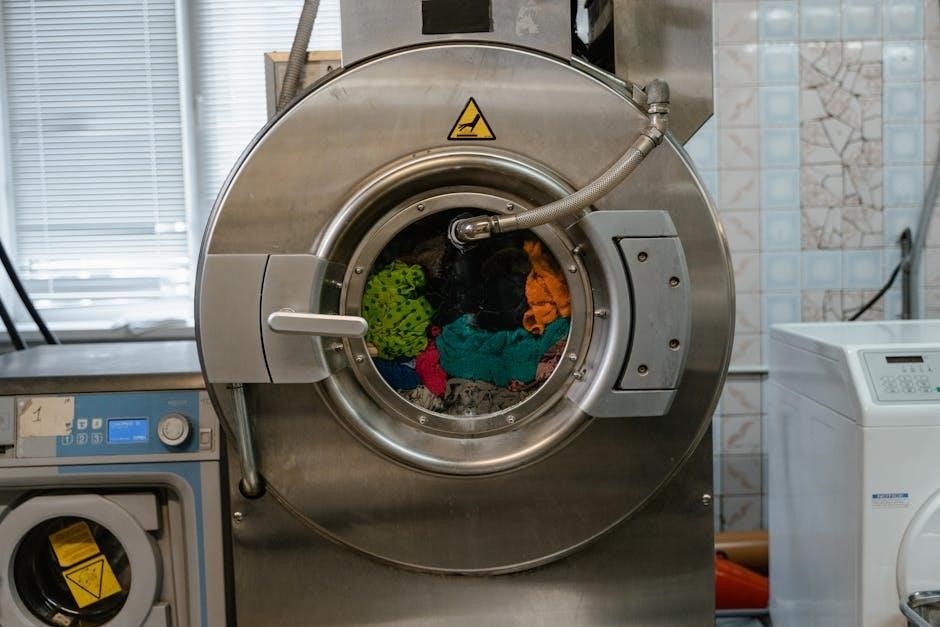
Embarking on GE washer repair can seem daunting, but with the right resources, many issues are resolvable by homeowners or skilled technicians. Access to comprehensive troubleshooting manuals is paramount, yet often restricted by manufacturers like GE, who prioritize authorized service networks.
This creates challenges, as independent repair professionals and DIY enthusiasts face hurdles in obtaining necessary technical information. However, a growing movement, fueled by “Right to Repair” legislation, aims to increase accessibility to these vital resources.
Currently, online communities like Reddit’s r/righttorepair highlight these struggles, while platforms like Repair Clinic and YouTube channels offer alternative pathways to diagnostic and repair guidance. Understanding the landscape of available manuals – official PDFs, technical service guides, and community-sourced documentation – is the first step towards successful GE washer repair.
Understanding GE Washer Model Numbers
Decoding a GE washer’s model number is crucial for locating the correct troubleshooting manuals and replacement parts. These alphanumeric codes contain vital information about the machine’s features, capacity, and manufacturing date. For example, the GTW750 series, frequently discussed in online resources, signifies a specific top-load washer configuration.
Each segment of the model number reveals details; the initial letters denote the appliance type (e.g., GTW for top-load washers), while subsequent numbers and letters specify features like capacity, color, and design variations.
Accurate model number identification is essential when searching for service manuals on platforms like GE’s official website or through third-party providers like Repair Clinic. Incorrect information can lead to incompatible parts or inaccurate repair instructions, hindering the troubleshooting process and potentially causing further damage.
Accessing GE Washing Machine Service Manuals
Obtaining GE washer service manuals can be challenging due to restricted access, as highlighted by discussions on r/righttorepair. While official GE manuals (often in PDF format) are the most reliable source, they aren’t always readily available for direct download. Independent repair technicians often face hurdles, including monthly fees for access to technical support and diagnostic tools.
Fortunately, alternative resources exist. Repair Clinic is frequently cited as a valuable repository for manuals and parts diagrams. YouTube channels also offer visual guides, supplementing written documentation.
Searching for manuals using the precise model number is paramount. Be aware that older models, like those covered in the January 2018 31-9281 Technical Service Guide, may have limited online availability.
Official GE Service Manuals (PDF Download)
Locating official GE service manuals in PDF format often requires diligent searching. While GE offers these manuals, access isn’t always straightforward, as noted in discussions regarding right-to-repair legislation. The availability varies significantly by model and age of the washing machine.
GE’s official channels may require registration or a fee for access to the complete technical documentation. Third-party services, like those offering “immediate PDF download,” exist, but verifying their legitimacy and the manual’s completeness is crucial.
Model-specific searches are essential; for example, the GTW750 series (referenced in the 31-9281 guide) will require a dedicated search. Be prepared for potential limitations and consider alternative resources if direct access proves difficult.
Repair Clinic Resources
Repair Clinic emerges as a prominent resource for GE washing machine troubleshooting, offering a comprehensive database of manuals, parts diagrams, and repair assistance. As highlighted on Reddit’s r/homeowners, this website provides a “gold mine of information” for appliance repair enthusiasts and professionals alike.
Beyond manuals, Repair Clinic supplies replacement parts, often with detailed installation guides and video tutorials. This makes it a valuable one-stop shop for diagnosing issues and completing repairs independently. Their resources cover a wide range of GE models, including top-load washers like the GTW750 series.
Users can search by model number to pinpoint specific documentation and parts, streamlining the repair process. While a purchase may be required for parts, the accessible information is a significant benefit.
Common GE Washer Problems & Troubleshooting
GE washing machine issues frequently involve failures to start, drainage problems, or spin cycle malfunctions. YouTube tutorials, like those focusing on “Fix Draining, Spinning Diagnostic Issues!”, offer step-by-step guidance for tackling these common concerns. These resources emphasize a methodical approach, starting with basic checks like power supply and water inlet connections.
Drainage issues often stem from clogged pumps or hoses, requiring inspection and cleaning. Spin cycle problems can indicate issues with the drive belt, motor coupling, or lid switch. Accessing service manuals, as discussed, is vital for understanding the internal components and diagnostic procedures.
Remember safety first; disconnect power before any internal inspection. Proper troubleshooting relies on accurate diagnosis, aided by manuals and online resources.
Washer Won’t Start: Diagnostic Steps
When a GE washer fails to start, begin with the simplest checks. Confirm the power cord is securely plugged into a functioning outlet. Test the outlet with another appliance to rule out electrical issues. Next, verify the lid switch is engaging correctly – a common failure point. Consult the service manual for your specific model to locate and test this component.
If the outlet and lid switch are functional, investigate the control panel. Look for error codes displayed, referencing the error code section of the manual for interpretation. A faulty control board might be the culprit, requiring professional diagnosis or replacement.
YouTube guides emphasize checking for tripped circuit breakers. Always disconnect power before further inspection!
Drainage Issues: Identifying the Cause
Persistent drainage problems in a GE washer often stem from a clogged drain pump or a kinked drain hose. Begin by inspecting the drain hose for obstructions – kinks, bends, or blockages. Ensure it’s properly inserted into the standpipe and not pushed in too far, which can cause siphoning.
Next, access the drain pump (refer to your service manual for location and removal instructions). Check for foreign objects like lint, coins, or small clothing items lodged within the pump impeller. A malfunctioning pump motor itself may necessitate replacement.
YouTube tutorials highlight the importance of checking the pump filter. Remember to disconnect power before any inspection! Consult repair resources like Repair Clinic for parts and diagrams.
Spin Cycle Problems: Troubleshooting Guide
If your GE washer struggles with the spin cycle, several factors could be at play. An unbalanced load is a common culprit – redistribute items evenly within the drum. Check the lid switch assembly; a faulty switch prevents the spin cycle from initiating as a safety measure.
A worn or broken drive belt connecting the motor to the transmission can also cause spin failures. Accessing and inspecting this belt requires consulting your service manual for proper disassembly. Furthermore, a failing motor coupling, designed to protect the motor, might be the issue.
YouTube guides demonstrate how to diagnose these components. Resources like Repair Clinic offer replacement parts and diagrams. Always disconnect power before any inspection or repair!
GE Washer Error Codes and Their Meanings
GE washing machines utilize error codes to signal malfunctions, streamlining the diagnostic process. While specific codes vary by model, understanding their general meaning is vital. Accessing the correct service manual – often available as a PDF download – is crucial for deciphering codes specific to your GTW750 series or other GE model.
Common codes relate to water inlet issues, drainage problems, or motor failures. For example, codes indicating a lack of water pressure suggest a blocked inlet hose or a faulty water inlet valve. Drainage errors often point to a clogged pump or drain hose.
Reddit discussions and YouTube tutorials frequently address common GE error codes, offering potential solutions. Remember to always prioritize safety and disconnect power before attempting any repairs.
Electrical Issues and Safety Precautions
Working with electrical appliances like GE washing machines presents inherent risks. Always disconnect the power supply at the breaker before initiating any diagnostic or repair procedures. This is paramount for personal safety and prevents potential damage to the machine.
Electrical issues can manifest as a complete lack of power, intermittent operation, or unusual noises. Inspect the power cord for damage and ensure the outlet is functioning correctly. Internal electrical components, such as the motor or control board, may require professional assessment.
Service manuals emphasize that repairs should only be undertaken by individuals with adequate electrical, electronic, and mechanical experience. Ignoring safety precautions can lead to severe injury or even fatality. Prioritize safety above all else.
Replacing Common GE Washer Parts
Addressing GE washer malfunctions often involves replacing worn or damaged components. Two frequently replaced parts are the water inlet valve and the pump. Repair Clinic serves as a valuable resource for sourcing these parts and accessing detailed replacement guides.
Replacing the water inlet valve typically requires disconnecting the water supply lines and electrical connections. The pump replacement involves accessing the pump housing, often located at the base of the machine, and disconnecting associated hoses and wiring.
Service manuals provide specific diagrams and instructions for each model, ensuring correct installation. YouTube tutorials can offer visual guidance, but always consult the manual for model-specific details. Proper part replacement restores functionality and extends the washer’s lifespan.
Water Inlet Valve Replacement
Replacing a faulty water inlet valve restores water flow to your GE washer. Begin by disconnecting the power supply and shutting off the water supply lines connected to the valve. Repair Clinic offers detailed guides and diagrams specific to GE models, crucial for this process.
Disconnect the wires connected to the valve, noting their positions for reassembly. Carefully remove the old valve, paying attention to any retaining clips or screws. Install the new valve, ensuring a secure fit and proper alignment of the water inlets.
Reconnect the wires, matching their original positions, and reattach the water supply lines. Turn on the water supply and check for leaks. A successful replacement restores proper filling and operation.
Pump Replacement Procedures
Addressing drainage issues often requires pump replacement. First, disconnect power and water lines. Accessing the pump typically involves removing the front or rear panel of the GE washer – Repair Clinic provides model-specific disassembly instructions.
Disconnect the hoses attached to the pump, preparing for potential water spillage. Unplug the electrical connector and remove any mounting bolts securing the pump. Install the new pump, ensuring proper hose and electrical connections.
Reassemble the washer panels and restore power and water supply. Test the washer’s drain cycle to confirm proper operation. YouTube tutorials demonstrate these steps visually, aiding in successful pump replacement and restoring drainage functionality.
Using Diagnostic Mode on GE Washers
GE washers feature diagnostic modes to help pinpoint issues without specialized tools. Accessing this mode varies by model, but often involves pressing a sequence of buttons on the control panel – consult your specific model’s service manual for the correct procedure.
Diagnostic mode displays error codes, providing clues about the malfunctioning component. These codes, detailed in GE’s service documentation, indicate problems ranging from motor failures to sensor errors.
Interpreting these codes streamlines troubleshooting, reducing guesswork. While some codes require professional intervention, others allow for DIY repairs. Remember that accessing motherboard programming and diagnostic tool firmware updates may require authorized servicer access, as noted on Reddit’s r/righttorepair.
The Impact of Right to Repair Legislation on GE Manual Access
Right to Repair legislation, particularly in states like California, aims to increase access to technical information and parts for appliance repair, challenging manufacturers’ traditional control. However, GE, like other appliance brands, has historically restricted access to service manuals and diagnostic tools.
Despite legislative efforts, obtaining comprehensive GE washer repair manuals remains a challenge, as highlighted by discussions on Reddit’s r/righttorepair. Manufacturers often limit access to authorized service providers, requiring monthly fees for technical support and firmware updates.
This restricted access impacts independent repair shops and consumers, hindering affordable repair options. The ongoing debate centers on balancing manufacturer intellectual property with the consumer’s right to repair their own appliances, driving demand for readily available documentation.
Finding Parts Diagrams for GE Washers
Locating accurate parts diagrams is essential for successful GE washer repairs, enabling identification of specific components and facilitating efficient replacements. Several online resources specialize in appliance parts and diagrams, notably Repair Clinic, frequently mentioned on Reddit’s r/homeowners as a valuable source.
These platforms typically offer exploded views of GE washer models, detailing each part’s name, number, and location within the machine. Utilizing the GE washer’s model number – crucial for accurate identification – is paramount when searching for diagrams.
Access to these diagrams empowers both DIY enthusiasts and professional technicians to order the correct parts, minimizing delays and ensuring a proper repair. Furthermore, official GE service manuals often include detailed parts lists and diagrams.
Top Load Washer Specific Troubleshooting (GTW750 Series)

The GE GTW750 series, a popular line of top-load washers, presents common issues addressable with targeted troubleshooting. The 31-9281 Technical Service Guide (January 2018) specifically details repairs for models like GTW750CPLDG and GTW750CSLWS, emphasizing safety for those with electrical/mechanical experience.
Frequent concerns include failure to start, drainage problems, and spin cycle malfunctions. Diagnostic steps often involve checking the lid switch, water inlet valve, and drain pump. YouTube tutorials, like those focusing on GE washer repair, provide visual guidance for these procedures.
Remember to consult the service guide for model-specific instructions and error code interpretations. Proper diagnosis, aided by available manuals and resources, is key to resolving GTW750 series issues effectively.
Resources for Experienced Technicians
Experienced technicians navigating GE washer repairs face ongoing challenges due to restricted access to technical information. Despite California’s Right to Repair legislation, GE maintains tight control over service manuals and diagnostic tools, often requiring monthly fees for authorized servicers to access updates and firmware.
However, resourceful technicians utilize platforms like Reddit’s r/righttorepair to share insights and workaround solutions. Repair Clinic remains a valuable source for parts diagrams and, occasionally, service manuals; Accessing the 31-9281 Technical Service Guide (for GTW750 series) provides a foundational understanding.
Staying current with evolving repair techniques and leveraging community knowledge are crucial for overcoming manufacturer limitations and delivering efficient GE washer service.
Preventative Maintenance for GE Washing Machines
Proactive maintenance significantly reduces the need for complex troubleshooting detailed in GE washer repair manuals. Regularly inspecting hoses for cracks and ensuring proper drainage prevents common issues like leaks and drainage problems, minimizing reliance on repair guides.
Cleaning the lint filter after each use, as outlined in service guides, prevents blockages impacting spin cycles. Periodically running a washer cleaning cycle with appropriate detergent removes residue buildup, extending the machine’s lifespan and reducing error codes.
While manuals offer solutions to problems, consistent preventative care, informed by basic troubleshooting knowledge, is the most effective approach to maintaining a reliable GE washing machine.